Lake Ice in Ontario
Ice-out and freeze-up dates for Ontario lakes, from records reaching back to 1852. How lake ice forms, the ice hut removal date in every fisheries management zone, and the public sources for ice conditions and ice safety.
Last updated 2026-09-28
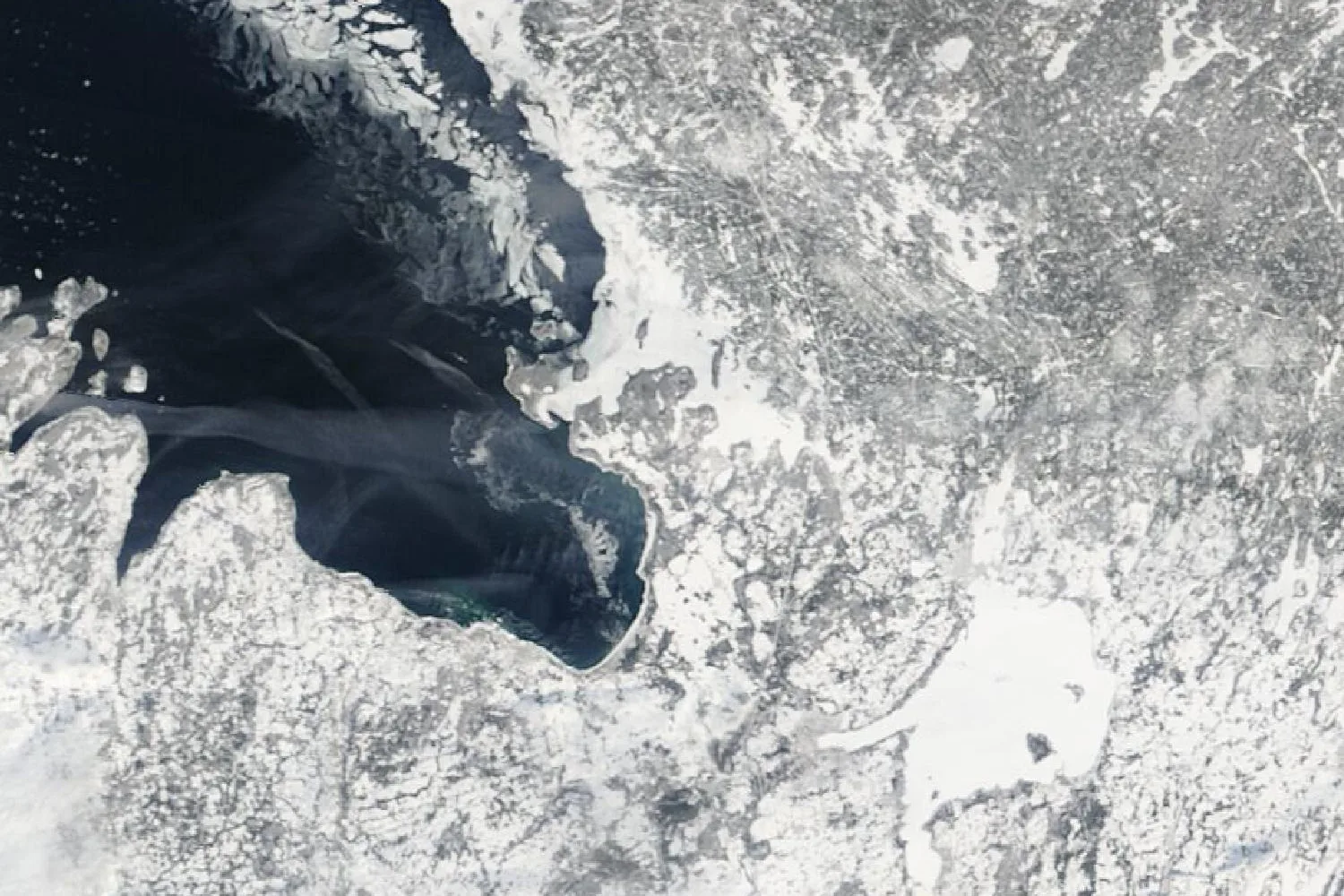
- Lake Simcoe ice record
- 173 wintersKempenfelt Bay, 1852-53 to 2024-25
- Lake records tabled
- 26 lakesRice Lake to Red Lake, tabled below
- Median ice-out near Dorset
- April 20eight lakes, 1975 to 2023
- Median freeze-up near Dorset
- December 7eight lakes, 1975 to 2022
- Freeze-up near Dorset
- +3.8 dayslater each decade since 1975
- Ice hut removal
- Mar 1, 15, 31set by fisheries management zone
Ice-Out Dates in Ontario
Ice-out, also called break-up, is the day a lake is recorded as no longer completely covered by ice. The records tabled below cover 26 Ontario lakes, and their median dates fall between April 8 and May 10. A median is the middle date of all the recorded springs: half came earlier and half later.
The southern lakes open first. Lake Scugog and Rice Lake have a median ice-out of April 11, and Chemong Lake April 16. The Muskoka lakes follow a few days later: Lake Muskoka on April 21, Lake Rosseau on April 21, and Lake of Bays on April 23. Lake Nipissing clears on a median April 29, Lake Opeongo in Algonquin Park on April 30, and Red Lake, Kenogamisis Lake and Pelican Lake in the northwest in the second week of May.
A single lake moves by as much as six weeks from one spring to the next. The ice left Lake Muskoka as early as March 31, 1946, and as late as May 12, 1926.
Ice-Out in Muskoka and Haliburton
Lake Muskoka has a recorded ice-out in 94 springs between 1900 and 1993, with a median of April 21. Lake Rosseau has a recorded ice-out in 95 springs between 1900 and 1995 and the same median, April 21. Lake of Bays, observed at Haystack Bay, has a recorded ice-out in 81 springs between 1939 and 2019 and a median of April 23. Eight small lakes near Dorset, recorded by the province since 1975, clear on a median April 20.
In Haliburton, Head Lake (Haliburton County) at Haliburton village has a recorded ice-out in 99 springs between 1900 and 2001, with a median of April 20. Shorter records hold April 24 for Percy Lake, April 25 for Boshkung Lake, April 25 for St. Nora Lake, and April 27 for Haliburton Lake.
Ice-Out in Algonquin Park
Lake Opeongo has a recorded ice-out in 41 springs between 1964 and 2004. Its median is April 30, the earliest recorded is April 12, 1981, and the latest May 16, 1972.
Ice-Out on Lake Simcoe and Lake Couchiching
Kempenfelt Bay, the western arm of Lake Simcoe at Barrie, has a recorded ice-out for 172 springs since 1853, with a median of April 18. In 2025 the bay cleared on April 8. Lake Couchiching has a recorded ice-out in 96 springs between 1900 and 1995 and a median of April 19, and Bass Lake (Simcoe County) near Orillia a median of April 17 across twenty springs.
Ice-Out in the Kawarthas and on Rice Lake
Chemong Lake has the longest record in the region, a recorded ice-out in 110 springs between 1900 and 2017, and a median of April 16. Lake Scugog has a recorded ice-out in 93 springs between 1901 and 1995 and a median of April 11. Rice Lake, observed at Indian River, has a recorded ice-out in 34 springs between 1969 and 2002 and the same median, April 11; its earliest recorded ice-out is February 11, 1981. Gold Lake in Peterborough County has a median of April 21.
Ice-Out in Northern Ontario
Lake Nipissing has a recorded ice-out in 62 springs between 1957 and 2019, the only northern record that runs past 2000, with a median of April 29. Trout Lake (Nipissing District) at North Bay clears on a median April 28 and Ramsey Lake at Sudbury on April 27. In the northwest the ice stays into May: Red Lake on a median May 7, Kenogamisis Lake at Geraldton and Pelican Lake at Sioux Lookout both on May 9.
Ice-out guessing contests run by lake associations and community groups each set their own definition of the day, so a contest date and a recorded ice-out date can differ.
| Lake | Springs | Years | Median | Earliest | Latest |
|---|---|---|---|---|---|
| Chesley LakeBruce County | 11 | 1985-1995 | Apr 8 | Apr 1, 1986 | Apr 20, 1992 |
| Lake ScugogDurham Region | 93 | 1901-1995 | Apr 11 | Mar 15, 1983 | Apr 29, 1904 and 1972 |
| Rice Lake, Indian RiverNorthumberland and Peterborough County | 34 | 1969-2002 | Apr 11 | Feb 11, 1981 | May 1, 1972 |
| Chemong LakePeterborough County | 110 | 1900-2017 | Apr 16 | Mar 21, 1983 and 2012 | May 4, 1936 and 1972 |
| Bass LakeSimcoe County | 20 | 1974-1994 | Apr 17 | Apr 4, 1981 | Apr 30, 1975 |
| Bass LakeMuskoka | 34 | 1970-2003 | Apr 17 | Mar 26, 2000 | May 4, 1972 |
| Lake Simcoe, Kempenfelt BaySimcoe County, York and Durham | 172 | 1853-2025 | Apr 18 | Mar 3, 1945 | May 9, 1874 |
| Lake CouchichingSimcoe County | 96 | 1900-1995 | Apr 19 | Mar 28, 1945 | May 5, 1904 |
| Dorset area, average of eight lakesMuskoka and Haliburton | 49 | 1975-2023 | Apr 20 | Mar 31, 2012 | May 6, 1978 and 2018 |
| Head LakeHaliburton County | 99 | 1900-2001 | Apr 20 | Mar 28, 1945 | May 5, 1904 |
| Gold LakePeterborough County | 26 | 1970-1995 | Apr 21 | Apr 4, 1981 | May 6, 1978 |
| Lake MuskokaMuskoka | 94 | 1900-1993 | Apr 21 | Mar 31, 1946 | May 12, 1926 |
| Lake RosseauMuskoka | 95 | 1900-1995 | Apr 21 | Mar 27, 1946 | May 7, 1926 |
| Lake of Bays, Haystack BayMuskoka | 81 | 1939-2019 | Apr 23 | Mar 26, 2012 | May 9, 1956 |
| Golden LakeRenfrew County | 17 | 1956-1972 | Apr 24 | Apr 12, 1968 | May 8, 1972 |
| Percy LakeHaliburton County | 26 | 1975-2001 | Apr 24 | Apr 5, 1981 | May 9, 1992 |
| Boshkung LakeHaliburton County | 14 | 1983-1996 | Apr 25 | Apr 15, 1987 | May 8, 1996 |
| St. Nora LakeHaliburton County | 21 | 1968-1990 | Apr 25 | Apr 5, 1981 | May 8, 1973 |
| Haliburton LakeHaliburton County | 16 | 1975-1994 | Apr 27 | Apr 5, 1981 | May 10, 1992 |
| Ramsey LakeSudbury District | 47 | 1940-1986 | Apr 27 | Apr 4, 1946 | May 11, 1956 and 1972 |
| Trout LakeNipissing District | 24 | 1957-1988 | Apr 28 | Apr 11, 1981 | May 12, 1972 |
| Lake NipissingNipissing District | 62 | 1957-2019 | Apr 29 | Apr 8, 2010 | May 14, 1972, 2014 and 2018 |
| Lake OpeongoAlgonquin Provincial Park | 41 | 1964-2004 | Apr 30 | Apr 12, 1981 | May 16, 1972 |
| Red Lake, Bruce ChannelKenora District | 32 | 1957-1992 | May 7 | Apr 19, 1987 | May 23, 1967 |
| Kenogamisis LakeThunder Bay District | 22 | 1968-1991 | May 9 | Apr 14, 1979 | May 25, 1974 |
| Pelican LakeKenora District | 48 | 1929-1994 | May 9 | Apr 18, 1986 | May 22, 1929 |
| Lake of the WoodsKenora District | 24 | 1956-1993 | May 10 | Apr 19, 1981 | May 28, 1980 |
When Do Ontario Lakes Freeze?
Freeze-up, also called ice-in or ice-on, is the day a lake is recorded as completely covered by ice. Near Dorset, the median freeze-up is December 7, with the earliest recorded on November 10, 1976, and the latest on January 5, 2016.
Most long ice records hold only the day the ice left. Freeze dates are held for Kempenfelt Bay on Lake Simcoe, for eight lakes read at Environment Canada weather stations, for Boshkung Lake, and for the Dorset lakes. Among them, Kenogamisis Lake freezes first, on a median November 11, and Red Lake follows on November 22. Lake Nipissing freezes on a median December 8. Kempenfelt Bay freezes last, on a median December 28, and in 2002 the bay did not close until February 2.
How Long a Lake Stays Frozen
Median ice seasons run from 109 days on Kempenfelt Bay to 176 days on Kenogamisis Lake. Near Dorset the median season is 134 days. The longest season recorded there is 164 days, in 2018-19, and the shortest 93 days, in 2011-12.
| Lake | Winters | Median | Earliest | Latest | Median season |
|---|---|---|---|---|---|
| Kenogamisis Lake | 25 | Nov 11 | Oct 29, 1976 | Nov 23, 1970 | 176 days |
| Red Lake | 31 | Nov 22 | Nov 4, 1991 | Dec 9, 1981 | 166 days |
| Pelican Lake | 46 | Nov 25 | Nov 2, 1984 | Dec 20, 1973 | 165 days |
| Lake of the Woods | 28 | Nov 29 | Nov 16, 1976 | Dec 20, 1993 | 162 days |
| Bass Lake (Simcoe County) | 21 | Dec 3 | Nov 11, 1976 | Dec 13, 1979 | 138 days |
| Ramsey Lake | 40 | Dec 7 | Nov 27, 1959 | Dec 20, 1952 and 1953 | 140 days |
| Dorset area, average of eight lakes | 48 | Dec 7 | Nov 10, 1976 | Jan 5, 2016 | 134 days |
| Lake Nipissing | 33 | Dec 8 | Nov 14, 1983 | Dec 24, 1984 | 142 days |
| Trout Lake (Nipissing District) | 21 | Dec 17 | Dec 2, 1976 | Dec 30, 1987 | 135 days |
| Golden Lake | 15 | Dec 18 | Nov 30, 1956 | Dec 24, 1967 | 131 days |
| Boshkung Lake | 14 | Dec 23 | Nov 23, 1989 | Jan 9, 1983 | 116 days |
| Lake Simcoe, Kempenfelt Bay | 167 | Dec 28 | Dec 1, 1875 | Feb 2, 2002 | 109 days |
Why Large, Deep Lakes Freeze Later
A lake freezes only after its whole body of water has cooled. Fresh water is densest at about 4 °C, so through the autumn the surface water cools, becomes heavier, sinks and is replaced from below. This mixing, called fall turnover, continues until the whole lake is near 4 °C. Water cooled below that point is lighter and stays at the surface, and ice can then form on a calm, cold night.
A deep lake holds more heat and takes longer to reach that point, and wind that keeps the surface mixed delays it further. Small, shallow lakes and sheltered bays close first, and the open water of a large lake can stay open weeks after the bays around it have frozen.
Lake Simcoe’s Ice Record, 1852 to Today
Ice on Kempenfelt Bay, at Barrie, has been recorded since the winter of 1852-53. The record spans 173 winters, with an ice-out date for 172 of them and a freeze-up date for 167, and it is the longest of the records named here and is still kept every year.
The early dates were collected from Barrie newspapers. The record was then kept year by year by Robert Sarjeant to the 1990s and by Alex Mills of York University since. The median freeze-up on the bay is December 28, the median ice-out April 18, and the median season 109 days.
Averaged twenty winters at a time, the bay’s freeze-up has moved from December 19 in the winters beginning 1860 to January 8 in those beginning 2000, and its ice-out from April 24 to April 14. Across the same two blocks the average season has gone from 126 days to 95.
The longest season on record is 152 days, in 1875-76. The shortest is 49 days, in 2023-24, when the bay froze on January 20 and cleared on March 9. The latest winter in the record, 2024-25, froze on January 10 and cleared on April 8.
| Winters beginning | Freeze-up | Ice-out | Season | Winters |
|---|---|---|---|---|
| 1860 to 1879 | December 19 | April 24 | 126 days | 18 |
| 1880 to 1899 | December 26 | April 21 | 116 days | 20 |
| 1900 to 1919 | December 29 | April 17 | 109 days | 19 |
| 1920 to 1939 | December 27 | April 15 | 109 days | 20 |
| 1940 to 1959 | December 29 | April 13 | 104 days | 19 |
| 1960 to 1979 | December 30 | April 21 | 112 days | 18 |
| 1980 to 1999 | January 3 | April 15 | 102 days | 20 |
| 2000 to 2019 | January 8 | April 14 | 95 days | 20 |
Are Ontario Lakes Freezing Later?
Near Dorset, freeze-up has moved from a November 26 average in the 1970s to December 11 in the 2010s, about 3.8 days later each decade. Ice-out has moved by less than a day each decade over the same years, so the shorter season comes almost entirely off the start of winter.
The century-long ice-out records agree on the spring. Lake Rosseau and Lake Muskoka, recorded from 1900 into the 1990s, show ice-out moving by about a tenth of a day each decade. On Kempenfelt Bay, where the record runs to 2025, both ends of the season have moved: freeze-up about 1.2 days later each decade since 1852, and ice-out about 0.7 days earlier.
| Winters beginning | Freeze-up | Ice-out | Season | Winters |
|---|---|---|---|---|
| 1970 to 1979 | November 26 | April 24 | 148 days | 5 |
| 1980 to 1989 | December 2 | April 20 | 138 days | 10 |
| 1990 to 1999 | December 7 | April 21 | 135 days | 10 |
| 2000 to 2009 | December 12 | April 18 | 127 days | 10 |
| 2010 to 2019 | December 11 | April 23 | 133 days | 10 |
How Lake Ice Forms
The first ice is a thin skin on still water once the surface reaches 0 °C. After that the sheet thickens from below: heat passes up through the ice into the colder air, and water freezes onto the underside of the sheet.
Clear Ice, White Ice and Grey Ice
Clear ice is the ice that grows downward from the underside of the sheet. It forms slowly and holds little air, so the dark water shows through it, which is why it is also called black ice or blue ice.
White ice, or snow ice, forms on top of the sheet. Heavy snow presses the ice down until water rises through cracks and floods the snow, and that slush freezes. It is opaque because of the air trapped in it. Snow also insulates the ice below it and slows the growth of clear ice, so a snowy winter can build a sheet that is thick and largely white.
Grey ice is ice holding water, most often during a thaw. In spring the sheet weakens along the boundaries between its crystals into long vertical columns, a condition called candled or honeycombed ice.
Ontario’s ice safety guidance ranks clear blue ice as the strongest kind, well ahead of white or opaque ice, and calls for double the thickness on white or opaque ice. The Canadian Red Cross describes clear blue to black ice as the strongest, advises against white opaque ice, and describes grey ice, which holds water, as unsafe to stand on.
Cracks and Pressure Ridges
An ice sheet expands as it warms and contracts as it cools. On a cold night it cracks, the cracks fill with water and freeze, and the sheet is larger the next time it warms. Where two parts of a sheet push together, the ice buckles into a pressure ridge, and the ice beside a ridge is often broken or thin.
Ice in Spring: Break-Up and Ice Push
Break-up starts at the edges. Shallow water along the shore warms first, and inflowing streams open channels of water at their mouths. As the snow on the ice melts, the sheet darkens, absorbs more sunlight and candles. A weakened sheet can clear from a lake within a day or two once wind breaks it up and drives it downwind.
Ice Push and the Shoreline
Repeated through a winter, the cracking and refreezing of an ice sheet pushes its edge against the shore. This ice push can shove rocks, lift and twist docks, and damage boathouses and shoreline walls. Wind driving broken ice onto the shore at break-up, sometimes called ice shove, can do the same within hours.
Safe Ice Thickness
No public record reports the thickness or the condition of the ice on any Ontario lake on a given day. Ice thickness varies across a single lake, and the guidance on how much ice is needed for walking, skating, snowmobiles and vehicles is published by the bodies below.
| Source | What it covers |
|---|---|
| Government of Ontario, ice fishing | Minimum clear-ice thickness for snowmobiles and light vehicles, and how white ice changes it. Where ice is often weaker. Checking thickness while moving out from shore. |
| Canadian Red Cross | Minimum thickness for one person, for a group, and for a snowmobile. Ice colour and strength. |
| Lifesaving Society | Ice safety and ice rescue. |
| Ontario Federation of Snowmobile Clubs | Status of the trail network, including trails that cross lakes. |
Where Ice Is Often Weaker
The province’s guidance lists the places where ice is often weaker than the ice around it: over moving water and springs, near pressure cracks and old ice holes, and around the mouths of rivers and streams. It notes that ice near shore is often much thicker than ice farther out, especially early in the season, and recommends checking the thickness regularly with a spud bar (a heavy chisel on a long handle) or an auger when moving away from shore. It also notes that heavy snow on a lake slows freezing.
Ice Thickness Chart
The Canadian Red Cross publishes its 15-20-25 rule: a minimum of fifteen centimeters of ice for one person walking or skating, twenty centimeters for a group such as a skating party or a hockey game, and 25 centimeters for a snowmobile or an ATV. The Government of Ontario’s ice fishing guidance gives at least twenty centimeters of clear blue ice for a snowmobile and 30 centimeters or more for a light vehicle, and doubles both figures for white or opaque ice.
Ice Conditions Today
Georgian Bay and the Great Lakes
The Canadian Ice Service publishes daily ice charts for the Great Lakes, including Georgian Bay, through the Canadian Coast Guard’s e-Navigation portal. Each chart records the concentration and type of ice across open water, for navigation. The Great Lakes Environmental Research Laboratory in the United States publishes daily ice cover for all five lakes.
Inland Lakes, Including Lake Simcoe
No public body reports daily ice conditions on Ontario’s inland lakes. The province’s ice fishing guidance advises checking conditions with local ice hut operators and other anglers. Hut operators report on the ice at their own operations, and police services and municipalities around the larger lakes issue public warnings when ice is judged unsafe.
Snowmobile Trails
The Ontario Federation of Snowmobile Clubs publishes trail status in its Interactive Trail Guide, marking each trail available, limited or unavailable. The status reports whether a trail is open and makes no statement about the condition of the trail.
Travel on Lake Ice
Winter Roads in the Far North
Ontario’s winter roads are built each season over land, frozen rivers and lakes by remote and First Nation communities, with funding from the province. The network runs about 3,200 kilometers and connects 32 remote First Nation communities and the Town of Moosonee to the province’s highway and rail system. The roads open from around mid-January until the spring thaw.
Skating on Lake Ice
Touring on natural lake ice, known as nordic skating or wild ice skating, depends on clear ice that formed before the first heavy snow. Snow on new ice covers the smooth surface, and once flooded and refrozen it forms white ice.
Snowmobiles and Vehicles
The province’s ice fishing guidance sets separate minimum thicknesses for snowmobiles and for light vehicles, and the Federation of Snowmobile Clubs’ trail status covers crossings on its network. Ice away from the trail network has no public report.
Ice Huts and Ice Fishing in Ontario
Ontario sets no separate ice fishing season. Each species has an open season in each fisheries management zone, one of the twenty zones the province sets its fishing rules by, and those seasons apply on the ice as they do on open water.
Ice fishing requires a valid Ontario fishing licence, sport or conservation. In most waters an angler may fish through the ice with two lines, kept within 60 meters and in clear view at all times.
Ice Hut Removal Dates
Zones 9 to 12 and 14 to 20 each set a date by which ice huts must be off the ice: March 1, March 15 or March 31. Every hut must also be removed before the ice breaks up, whether or not that date has passed, and in the zones with no date the break-up rule is the only one. The removal date clears huts from the ice ahead of the thaw and does not end fishing in the zone.
| Remove by | Zones | Lakes in those zones, for example |
|---|---|---|
| March 1 | 17, 20 | Rice Lake, Lake Scugog, Pigeon Lake, Balsam Lake |
| March 15 | 14, 16, 18, 19, and 12 below the Lake Timiskaming dam | Lake Simcoe, Lake Couchiching, Big Rideau Lake |
| March 31 | 9, 10, 11, 15, and 12 above the Lake Timiskaming dam | Lake Muskoka, Lake Nipissing, Lake Temagami, Lake Opeongo |
| No set date | 1 to 8, and 13 | Red Lake, Minnitaki Lake, Wabigoon Lake |
Ice Hut Registration
An ice hut needs a registration number in zones 9 to 12 and 14 to 20 when it is built of anything other than fabric, or when it is a fabric tent covering 7 square meters or more once set up. Registration is free and is done once, and the same number may be used on every hut an owner has. Numbers are issued online through the Fish and Wildlife Licensing Service or in person at a participating ServiceOntario location, and no Outdoors Card is required. The number is displayed on the outside of the hut in characters at least 6.3 centimeters high.
A commercial or tourist ice fishing operation on Lake Nipissing needs a special licence, and a hut in a provincial park may need further permits from the park.
Ice Hut Dates on Selected Lakes
A lake’s zone decides its date, and neighbouring lakes can fall in different zones. Sparrow Lake and Gloucester Pool lie in zone 16, with a March 15 removal date, while most of the Muskoka lakes north of them lie in zone 15, with March 31. The province’s zone map and its Fish ON-Line viewer show which zone a lake lies in.
| Lake | Zone | Remove by | Hut registration |
|---|---|---|---|
| Lake Simcoe | 16 | March 15 | Required |
| Lake Couchiching | 16 | March 15 | Required |
| Lake Nipissing | 11 | March 31 | Required |
| Lake Temagami | 11 | March 31 | Required |
| Rice Lake | 17 | March 1 | Required |
| Lake Scugog | 17 | March 1 | Required |
| Pigeon Lake | 17 | March 1 | Required |
| Sturgeon Lake (Kawartha Lakes) | 17 | March 1 | Required |
| Balsam Lake | 17 | March 1 | Required |
| Chemong Lake | 17 | March 1 | Required |
| Buckhorn Lake | 17 | March 1 | Required |
| Lake Muskoka | 15 | March 31 | Required |
| Lake Rosseau | 15 | March 31 | Required |
| Lake of Bays | 15 | March 31 | Required |
| Lake Opeongo | 15 | March 31 | Required |
| Big Rideau Lake | 18 | March 15 | Required |
| Red Lake | 4 | Before break-up | Not required |
Where the Records Come From
Ice dates in Ontario come from people watching lakes from the shore, and three collections hold the long records.
- The Dorset lakes. Ontario’s Ministry of the Environment, Conservation and Parks records freeze-up and ice-out on eight lakes within 10 to 30 kilometers of Dorset, by eye and from cameras set on the shore, and publishes the average of the eight as one date each winter. The published record runs from 1975 to 2023.
- The Global Lake and River Ice Phenology Database, held by the National Snow and Ice Data Center in the United States, gathers ice records from observers worldwide. Its Ontario records were contributed by Peter J. Dillon of the Ontario Ministry of the Environment, by W. R. Skinner of Environment Canada, whose records were read at weather stations and airports, and by Martyn N. Futter. Most end between 1985 and 2004.
- Kempenfelt Bay. Lake Simcoe’s record is kept at York University and published on DataStream, an open platform for water data.
Some lake associations keep an ice book, a yearly note of the day the ice formed and the day it left. Published as open data, such a book becomes a public record of its lake. Two residents of Clearwater Lake near Sudbury have published their lake’s ice dates on DataStream from 2005 onward.
Common Questions
What does ice-out mean?
Ice-out is the day a lake is recorded as no longer completely covered by ice. Freeze-up, or ice-in, is the day it is recorded as completely covered. Observers read both from the shore, and each keeps to a definition of its own.
When does the ice go out in Muskoka?
Lake Muskoka and Lake Rosseau both have a median ice-out of April 21, across more than ninety springs from 1900. Lake of Bays has a median of April 23, and the eight lakes near Dorset April 20.
When is ice-out in Algonquin Park?
Lake Opeongo has a median ice-out of April 30 across 41 springs between 1964 and 2004.
When does Lake Simcoe freeze?
Kempenfelt Bay has a median freeze-up of December 28 across 167 winters since 1852. The average for the winters beginning 2000 to 2019 is January 8, and in 2024-25 the bay froze on January 10.
When does the ice go out on Lake Simcoe?
Kempenfelt Bay has a median ice-out of April 18 across 172 springs. The average for the winters beginning 2000 to 2019 is April 14.
When do ice huts have to come off the ice in Ontario?
By March 1, March 15 or March 31, depending on the fisheries management zone, and before the ice breaks up in every zone. Lake Simcoe is in zone 16, with March 15. Most of Muskoka is in zone 15, with March 31, and the Kawartha Lakes are in zone 17, with March 1.
Is there an ice fishing season in Ontario?
No separate season exists. The open season for each species in each zone applies on the ice as on open water.
Do ice huts need to be registered?
In zones 9 to 12 and 14 to 20, any hut built of something other than fabric, and any fabric tent of 7 square meters or more, needs a free registration number shown on the outside.
How thick does ice need to be to walk on?
The Canadian Red Cross gives fifteen centimeters as the minimum for one person walking or skating, and twenty centimeters for a group. No public record reports the thickness of the ice on a given lake on a given day.
How thick does ice need to be for a snowmobile or a car?
The province gives at least twenty centimeters of clear blue ice for a snowmobile and 30 centimeters or more for a light vehicle, and doubles both on white or opaque ice. The Canadian Red Cross gives 25 centimeters for a snowmobile or an ATV.
What is the difference between white ice and black ice?
Black ice is clear ice that grows downward from the underside of the sheet, so the dark water shows through it. White ice is snow and slush frozen on top of the sheet, opaque with trapped air. Safety guidance describes clear ice as the stronger of the two.
Are Ontario lakes freezing later than they used to?
Near Dorset, freeze-up has moved about 3.8 days later each decade since 1975, and ice-out has barely moved. On Kempenfelt Bay the average season has gone from 126 days in the winters beginning 1860 to 95 in those beginning 2000.
Lake Maps
Every lake linked in this guide has a page of its own, with its depth survey, its water record and its ice dates. Printed depth maps of the drawn lakes are made to order from the province’s own depth soundings.
See the lake maps All lake pagesSmall print
- Ice dates
- An ice-out date is the day a lake was recorded as no longer completely covered by ice, and a freeze-up date the day it was recorded as completely covered. Both are read from the shore, and a large lake does not freeze or clear everywhere at once. A winter without a date is a winter with no observation recorded.
- Comparing lakes
- Each record covers its own run of years, and observers used different definitions of complete ice cover, so a difference between two lakes partly reflects the observers and the years. A lake’s record read against its own history is the sounder comparison.
- The Dorset average
- Each Dorset figure is the average of eight lakes within 10 to 30 kilometers of Dorset and is not a record of any other lake. The eight are smaller and shallower than most of the lakes named here, and a smaller lake freezes sooner.
- Records that stopped
- Most records in the Global Lake and River Ice Phenology Database end between 1985 and 2004, when observations stopped being contributed. Dates from them describe those years.
- Kempenfelt Bay
- The Lake Simcoe record is read at Kempenfelt Bay, one bay of the lake, from the shore of a city that grew from about 16,000 people in 1950 to about 150,000 by 2020. The record does not separate that change from any other. Six freeze-up dates and one ice-out date are missing from it, and the steward’s note records these as winters in which no date was taken.
- Trends
- Changes per decade are straight-line fits across each record’s own years and averages over blocks of winters. They describe the recorded past and forecast nothing.
- Ice hut rules
- Removal dates and registration rules are set by fisheries management zone and change from time to time. They were read from the province on September 28, 2026 and are restated here in summary. The province’s fishing regulations are the authority.
- Ice safety
- Nothing here reports the thickness or condition of the ice on any lake on any day. The thickness figures are general guidance restated from the Canadian Red Cross and the Government of Ontario, each named, for ice measured on the spot. Ice thickness varies across a single lake, and neither body’s figures describe the ice on a particular lake. The Red Cross’s pages do not all give the same figures; those in the chart are the ones it publishes as its 15-20-25 rule.
- Ice-out and freeze-up dates: Benson, B., Magnuson, J. and Sharma, S. (2000), Global Lake and River Ice Phenology Database, Version 1, National Snow and Ice Data Center, doi 10.7265/N5W66HP8. Ontario records contributed by Peter J. Dillon, W. R. Skinner and Martyn N. Futter.
- Kempenfelt Bay: Alex Mills, York University. 2025. "Lake Simcoe Kempenfelt Bay Ice Data" (dataset). 2.0.0. DataStream. https://doi.org/10.25976/qcvg-5a23. Contains information from Lake Simcoe Kempenfelt Bay Ice Data which is made available under the ODC Attribution License.
- Dorset lakes: Inland Lakes and Streams, Physical Conditions, Dorset Environmental Science Centre, Ministry of the Environment, Conservation and Parks, Open Government Licence – Ontario.
- Ice hut rules and ice safety guidance: Government of Ontario, Ice fishing, updated September 20, 2023, read September 28, 2026.
- Ice thickness: Canadian Red Cross, On Thin Ice (2011) and Safety On and Around the Ice (2014); ice colour: Ice Safety: Know when it’s safe to play (2019). All read September 28, 2026.
- Winter roads: Government of Ontario, Northern Ontario winter roads, and the Winter Roads Program announcement of 2025.